Winter Changes the Rules
As soon as the temperature drops and the heat comes on indoors, I start seeing the same pattern in my chair: dry ends, static, and clients wondering why their usual routine suddenly isn't cutting it anymore. Cold air holds less moisture. Indoor heating systems dry things out even further. Your routine needs to shift with the season. It can't stay exactly the same year round.
Increase Your Deep Conditioning Frequency
If you deep condition every two weeks in warmer months, consider moving to weekly deep conditioning through the winter. The drier air pulls moisture out of your hair faster, so you need to replace it more often to keep your strands from becoming brittle.
Layer in Heavier Sealants
Products change with the seasons. What feels perfect in summer humidity can feel completely inadequate in January. Winter is the time to reach for slightly heavier butters and oils to seal in moisture, since the air itself is no longer providing any humidity to help you out. Shea butter based products and heavier oils, like castor or avocado oil, work well as a top layer over your usual leave in.
Protect Your Hair From Hats and Scarves
Wool hats and scarves keep you warm. Terrible for your hair, though, if worn directly against dry strands. Rough fibers create friction. They pull moisture out with every movement of your head. Wear a satin lined hat, or place a silk scarf between your hair and the hat or scarf, to get the warmth without the damage.
Watch Out for Hot Showers
A hot shower feels amazing when it's freezing outside. But hot water strips moisture and natural oils from your hair, just as it does from your skin. Keep it lukewarm. Especially your final rinse, after conditioning.
Protective Styles Can Help, But Do Not Neglect Your Scalp
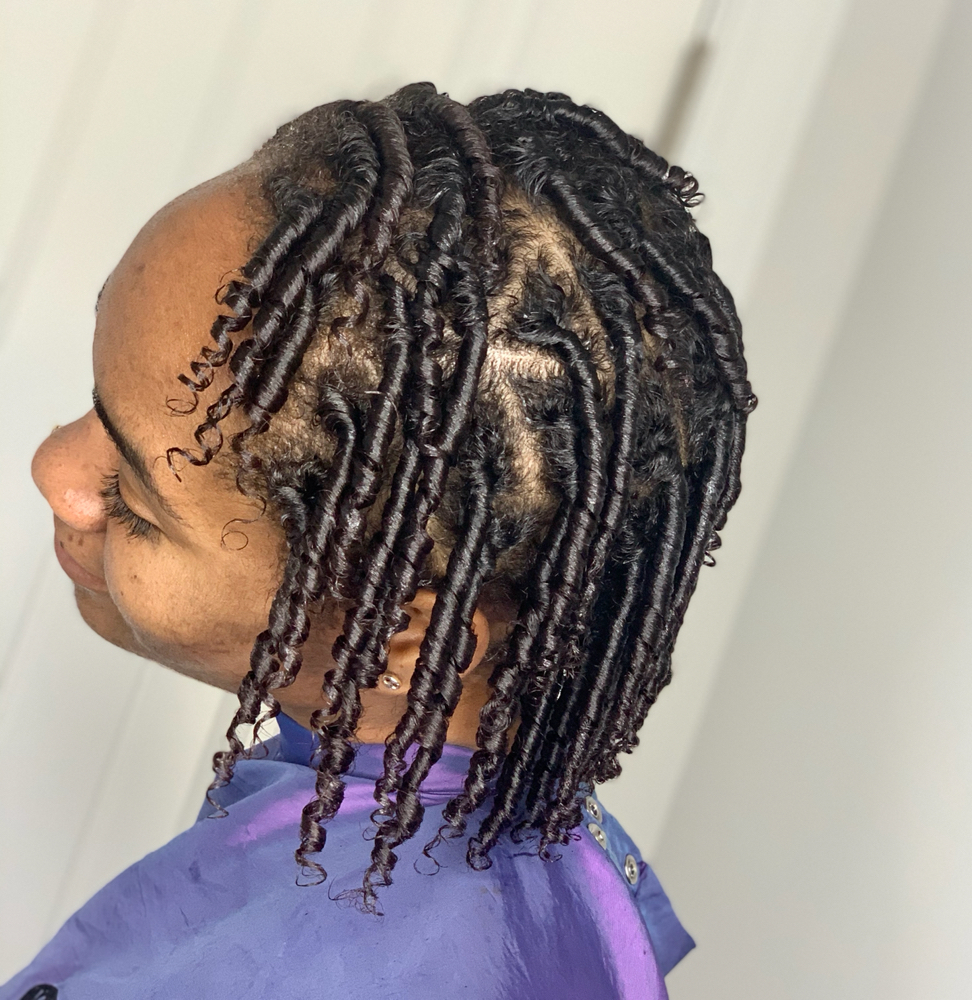
Braids, twists, and other low manipulation styles are popular in winter because they minimize daily exposure to cold, dry air. Don't forget your scalp. It still needs attention during a protective style. Dry scalp under braids is common in winter and can lead to itching and flaking if you aren't moisturizing your scalp directly, not just your visible hair.
Do Not Skip the Scalp Massage
A dry, cold, indoor heated environment punishes your scalp as much as your strands. A weekly scalp massage with a lightweight oil improves circulation and helps distribute natural oils, which becomes even more valuable when the air around you is working against your scalp's moisture balance. Want the full breakdown? I go into more depth on this in another post.
Come In for a Winter Reset
If your hair typically struggles through the colder months no matter what you try, a professional deep conditioning treatment or scalp spa service can give your hair the reset it needs heading into winter. You can browse our full range of treatments on our services page, and if you're ready to get ahead of the dry season, book an appointment.
Winter does not have to mean a step backward in your hair journey. A few seasonal adjustments keep your progress moving forward all year long.
Adjusting Your Wash Frequency in Winter
Some clients find they actually need to wash slightly less often in winter, since indoor heating can reduce how much your scalp sweats compared to warmer months, while others find the opposite is true, if dry indoor air leads to more flaking that needs regular cleansing to manage. Pay attention to your own scalp. Don't assume a blanket rule applies.
Static Is a Real Winter Problem Too
Dry winter air creates the perfect conditions for static, which can leave natural hair looking frizzy and undefined even with a good moisture routine, but a small amount of leave in conditioner or oil, rubbed between your palms and smoothed over the surface of your hair, helps combat it without weighing your style down.
Layering Products Correctly in Cold Weather
Winter calls for more layering. More product does not mean sloppier application, though. Continue applying products to soaking wet hair, and build your layers thoughtfully rather than piling on extra product all at once hoping it solves dryness, since a consistent LOC or LCO routine, just with slightly richer products, usually serves you better than an inconsistent, heavy handed approach.
Protecting Color Treated Hair Through Winter
If you have color treated hair, winter dryness can compound with the porosity changes that come from coloring, leading to hair that feels drier faster than your untreated friends might experience. Extra moisture focused deep conditioning helps offset this. So does a slightly gentler approach to heat styling during the driest months of the year.
Do Not Forget Your Skin and Scalp Barrier
Just like the skin on your face and hands, your scalp has a barrier that can become compromised in harsh winter conditions, leading to increased sensitivity and irritation. Gentle, fragrance light products and consistent scalp oil application support that barrier through the season, the same way a good moisturizer supports your facial skin.
Winter hair care is really about giving your hair a little extra support to match the extra demands the season places on it, and with these adjustments, your hair can stay healthy, moisturized, and manageable right through to spring.