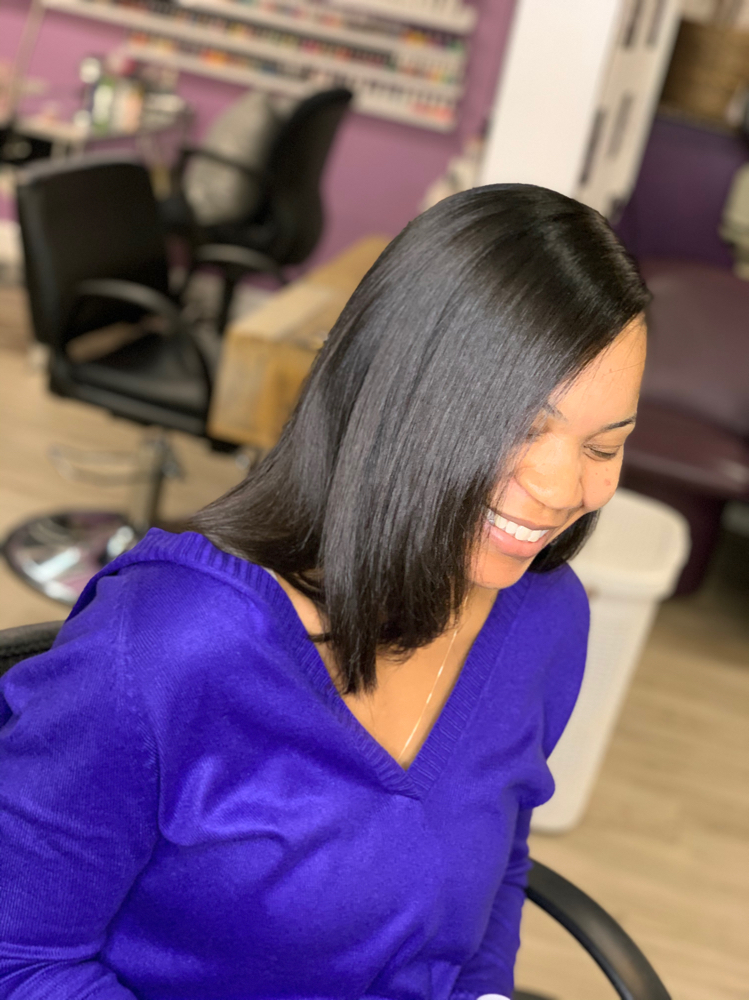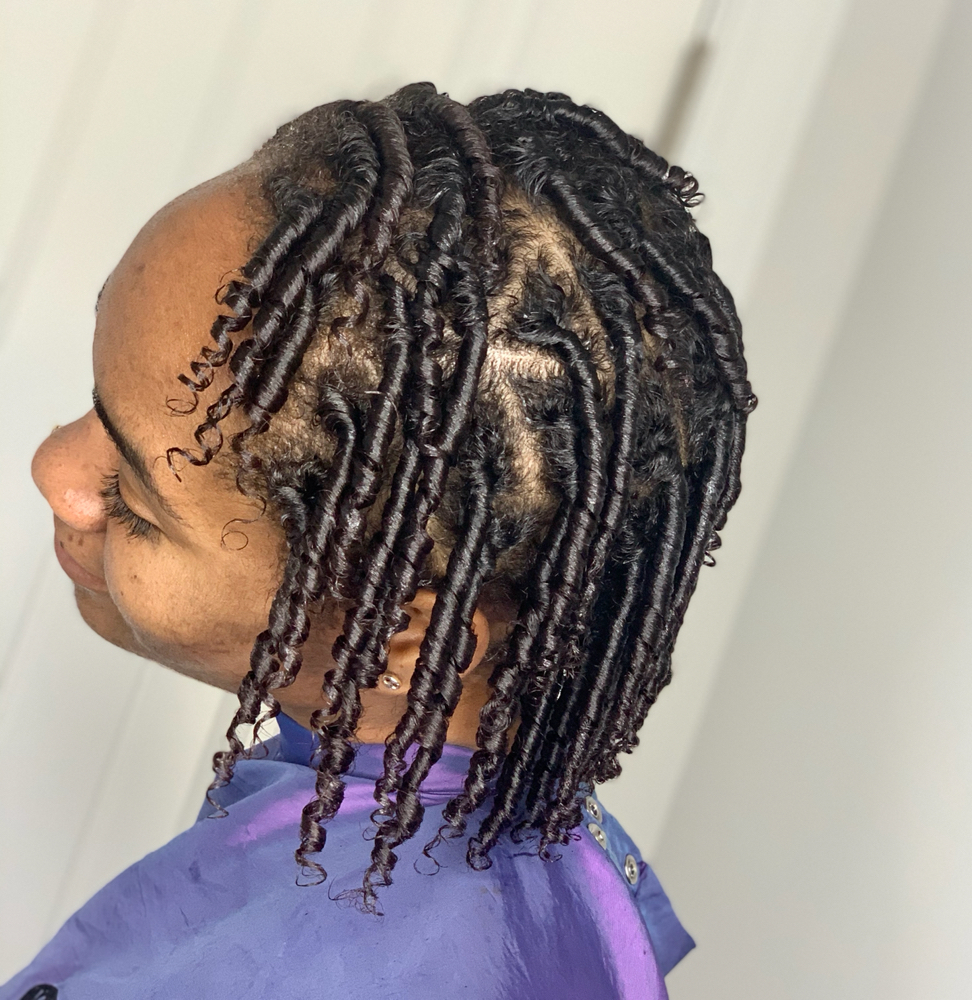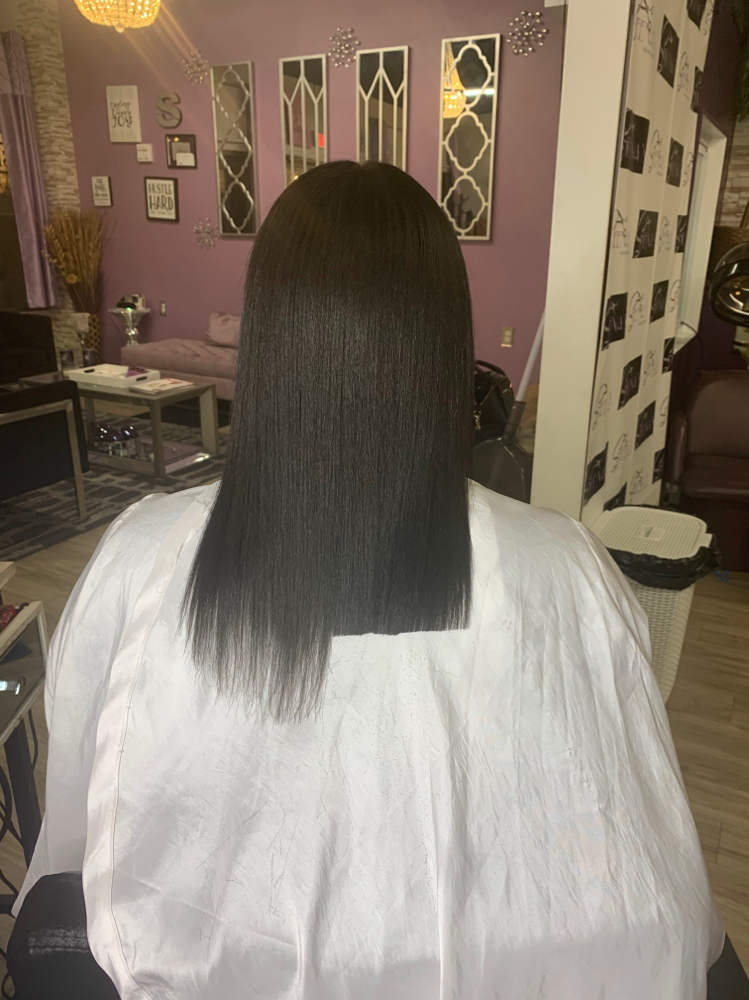
This might be the single most persistent myth I run into in the chair: the idea that avoiding trims is the fastest path to long hair. I understand the logic. If nobody's cutting anything off, surely you're keeping more length, right? But that's not actually how hair health works. I want to walk through why.
Split Ends Don't Stay Put
A split end is a strand where the protective outer cuticle has worn away at the tip, leaving the inner cortex exposed and vulnerable. Left alone, that split doesn't just sit there. It travels up the shaft over time, especially with continued manipulation, heat, and friction from things like combing, sleeping, and general daily wear.
Once a split has traveled far enough up the strand, that section of hair usually breaks off entirely, on its own, wherever it happens to catch. That breakage is uncontrolled. It happens at random points along the strand, rather than in a clean, even line. That's exactly why hair that hasn't been trimmed in a long time so often looks thin, wispy, and uneven at the ends, despite technically being "longer."
The length you're avoiding cutting on purpose is often being lost anyway. Just less predictably, and less evenly, than a scheduled trim would manage it.
The Retention Math
Length retention is really a math problem: growth minus breakage equals net length gained. Most people grow around half an inch of hair per month from the scalp. If you're losing that same half inch, or more, to uncontrolled breakage from untreated split ends, you're not actually gaining any length at all. You're running in place. Or worse, losing ground, while feeling like you're "protecting" your length by avoiding the salon.
Regular, small trims remove the compromised ends before they have a chance to split further and cause that unpredictable breakage. In other words: cutting a small, controlled amount on a schedule is frequently how you retain more length over the course of a year, more than not cutting at all.
Dusting vs. Trim vs. Cut, Know the Difference
Part of the confusion comes from these terms getting used interchangeably when they mean different things:
- Dusting removes a very small amount, just the very compromised tips, often a quarter inch or less, to clean up splits without any visually noticeable length change. This is maintenance, done frequently, often every 8 to 10 weeks.
- A trim removes a more noticeable but still moderate amount, generally up to about three inches on my service menu, meant to clean up damage that's accumulated over a longer stretch or reshape the line of the cut.
- A cut is a more significant change, reshaping length or style intentionally, not just maintaining what's already there.
Knowing which one you actually need matters. If you're just maintaining healthy ends, you don't need a dramatic cut. A regular dusting or trim on a consistent schedule does the job, without sacrificing the length you've worked to grow.
Signs You're Overdue
- Ends feel noticeably rougher or thinner than the rest of the strand
- You're seeing visible splits when you look closely at your ends
- Hair tangles more easily than it used to, especially toward the bottom
- It's been more than three months since your last trim or dusting
- Your ends look wispy or uneven even though the hair overall feels long
Building Trims Into a Real Growth Strategy
I tell clients to think of trims as part of the growth process, not the opposite of it. A realistic, healthy approach looks like this: consistent scalp care to support what's growing in, gentle handling and protective styling to minimize breakage day to day, and regular small trims to remove damage before it travels and costs you more length than the trim itself ever would. All three pieces work together. Skipping any one of them, including the trims, usually shows up in your retention over time.
If it's been a while since your ends had real attention, that doesn't mean starting over with a dramatic cut. Come in, and let's assess what's actually happening. We'll figure out the smallest amount necessary to get your ends healthy again. Check out our services page for trim and cut options, or book an appointment, and we'll protect the length you've already grown.